Learn how to install Confluence on RHEL 9 or CentOS 9 with this detailed step-by-step guide. Includes prerequisites, database setup, CLI examples, and optional reverse
Learn the key differences between Kanban and Agile methodology, including workflows, planning styles, performance metrics, and best use cases. Understand when to use Kanban, when Agile is more effective, and how hybrid approaches like Scrumban can benefit teams.
In modern software development and project management, teams aim to deliver high-quality work quickly and efficiently. Two approaches often discussed in this context are Kanban and Agile methodology. While Kanban is frequently grouped under the Agile umbrella, the two are not interchangeable. Each offers a unique framework, workflow style, and mindset for managing work.
This article will explore the differences between Kanban and Agile methodology, how they fit into team workflows, and how to decide which approach is best for your organization. The goal is to provide a clear, practical comparison that can guide real-world implementation.
Agile methodology is a broader project management philosophy focused on delivering work in small, iterative increments while continuously refining processes based on feedback. It prioritizes collaboration, adaptability, and transparency.
Agile is guided by four core values outlined in the Agile Manifesto:
|
|
|
|
Agile methods encourage:
|
|
|
|
Common Agile frameworks include:
| Framework | Characteristics | Best Use Cases |
|---|---|---|
| Scrum | Time-boxed sprints, defined roles (Scrum Master, Product Owner), regular ceremonies | Product development teams working in increments |
| Extreme Programming (XP) | Focus on engineering practices, test-driven development | Teams requiring high code quality and frequent releases |
| Lean Development | Eliminate waste, maximize customer value | Teams optimizing delivery process efficiency |
Agile is not one process—it’s a philosophy supported by multiple frameworks.
Kanban is a visual workflow management method originally used in manufacturing (Toyota Production System). Today, it’s widely used in software development, IT support, operations, and other knowledge work environments.
The main purpose of Kanban is to make work visible and improve flow by limiting work-in-progress (WIP).
▶️ Key Characteristics of Kanban |
|
|
|
|
|
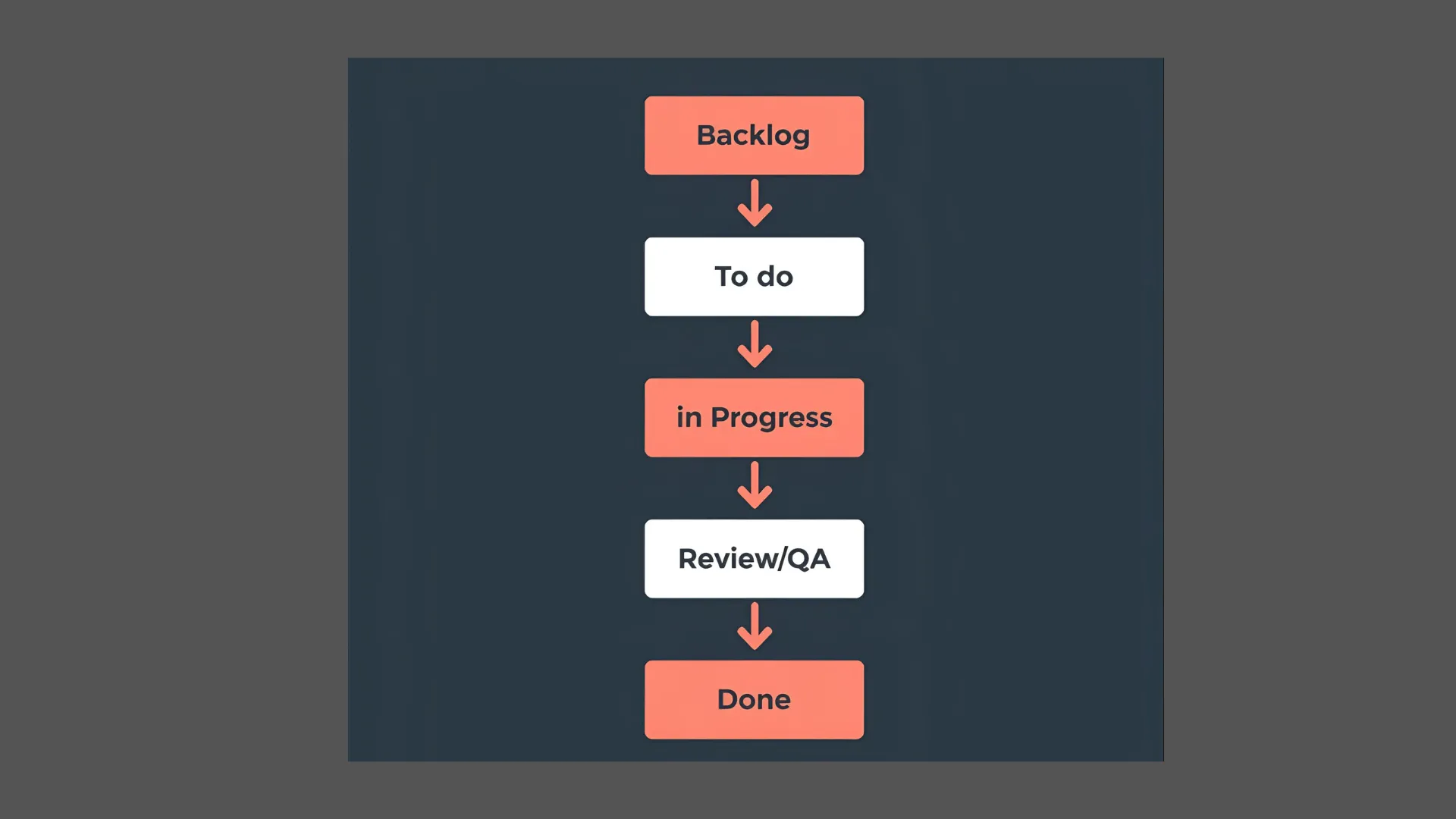
A typical Kanban board includes stages such as:
Backlog → To Do → In Progress → Review/QA → Done
Photo by admingeek from Infotechys
Teams move tasks across the board as work progresses.
While Kanban can be used inside Agile organizations, the two approaches differ in important ways.
| Aspect | Agile Methodology | Kanban |
|---|---|---|
| Scope | Broad philosophy guiding various frameworks | Specific workflow visualization and improvement method |
| Work Cadence | Iterative cycles (often sprints) | Continuous flow |
| Roles | May define specific roles (e.g., Scrum Master) | No mandatory roles |
| Planning | Regular planning and review sessions | Planning is ongoing, as needed |
| Measurement | Velocity (work per sprint) | Lead time & cycle time (speed through workflow) |
| Change Management | Change usually occurs between iterations | Change can occur anytime |
| WIP Control | Indirect, managed by time-boxing work | Explicit WIP limits on workflow stages |
Imagine a development team working in two-week sprints. The product owner prioritizes tasks in the backlog. The team selects work during a sprint planning session, commits, and executes. At the end of the sprint, they hold:
|
|
This cycle repeats. Work is released in batches aligned with sprint completion.
▶️ Example Sprint Cycle Timeline |
| Day | Activity |
|---|---|
| Day 1 | Sprint planning |
| Days 2–9 | Development, testing, daily standups |
| Day 10 | Sprint review and retrospective |
Agile works best when deliverables can be staged in predictable increments.
With Kanban, there is no fixed sprint. Instead, work flows continuously. The team adjusts capacity and priorities dynamically.
Here is an example of limiting work-in-progress using a Kanban tool or configuration script:
# Example: Setting WIP limit in a Kanban board configuration (YAML style)
columns:
- name: "In Progress"
wip_limit: 3
- name: "Review/QA"
wip_limit: 2
This ensures no more than three tasks are being developed at once and no more than two are waiting for review. This prevents team members from becoming overwhelmed and exposes bottlenecks early.
Kanban is especially effective for:
|
|
Choose Agile when:
|
|
|
|
This approach works well for:
|
|
|
Choose Kanban when:
|
|
|
|
This is ideal for:
|
|
|
|
Yes. Many teams use Scrum + Kanban (Scrumban) to combine benefits:
|
|
This hybrid model maintains predictability while improving flow efficiency.
Selecting between Kanban and Agile methodology depends on your team’s work patterns, culture, and constraints.
| Team Needs | Best Fit | Why |
|---|---|---|
| Structured releases and iteration learning | Agile | Encourages checkpoints and incremental delivery |
| Constant incoming work and priority changes | Kanban | Offers flexibility and visual flow management |
| Desire for both structure and flow optimization | Scrumban | Hybrid for balanced workflow and adaptability |
The decision is not strictly binary—teams often adjust and adapt processes to fit their environment.
Did you find this article helpful? Your feedback is invaluable to us! Feel free to share this post with those who may benefit, and let us know your thoughts in the comments section below.

Learn how to install Confluence on RHEL 9 or CentOS 9 with this detailed step-by-step guide. Includes prerequisites, database setup, CLI examples, and optional reverse

Learn how to install Jira on RHEL 9 or CentOS 9 with our step-by-step guide. Enhance your team’s collaboration and productivity with this comprehensive tutorial.

In this guide, we’ll walk you through the process of installing and configuring MediaWiki on RHEL 9 or CentOS 9, enabling you to create your